One Owner, One Scorecard: Holiday Marketing That Works
What does the 2026 holiday season look like for businesses?
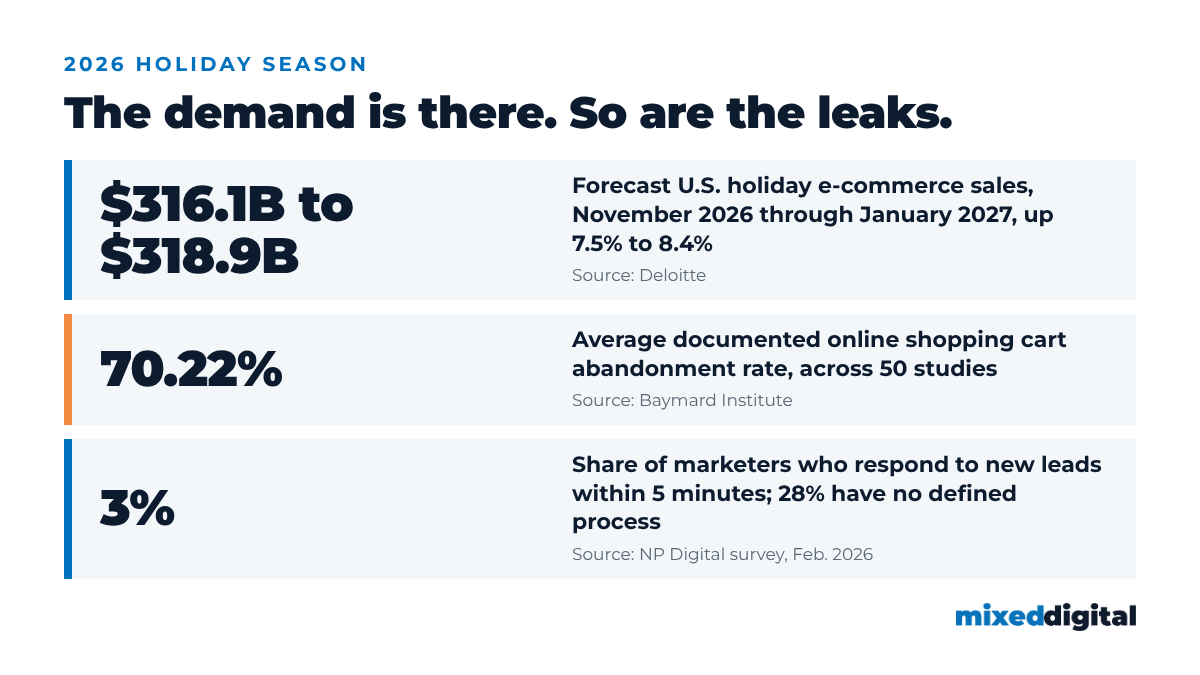
Deloitte forecasts U.S. holiday retail sales of $1.70 trillion to $1.71 trillion for November 2026 through January 2027, up 4.0% to 4.8% from the same period last year. E-commerce is growing faster: Deloitte projects $316.1 billion to $318.9 billion, an increase of 7.5% to 8.4%.
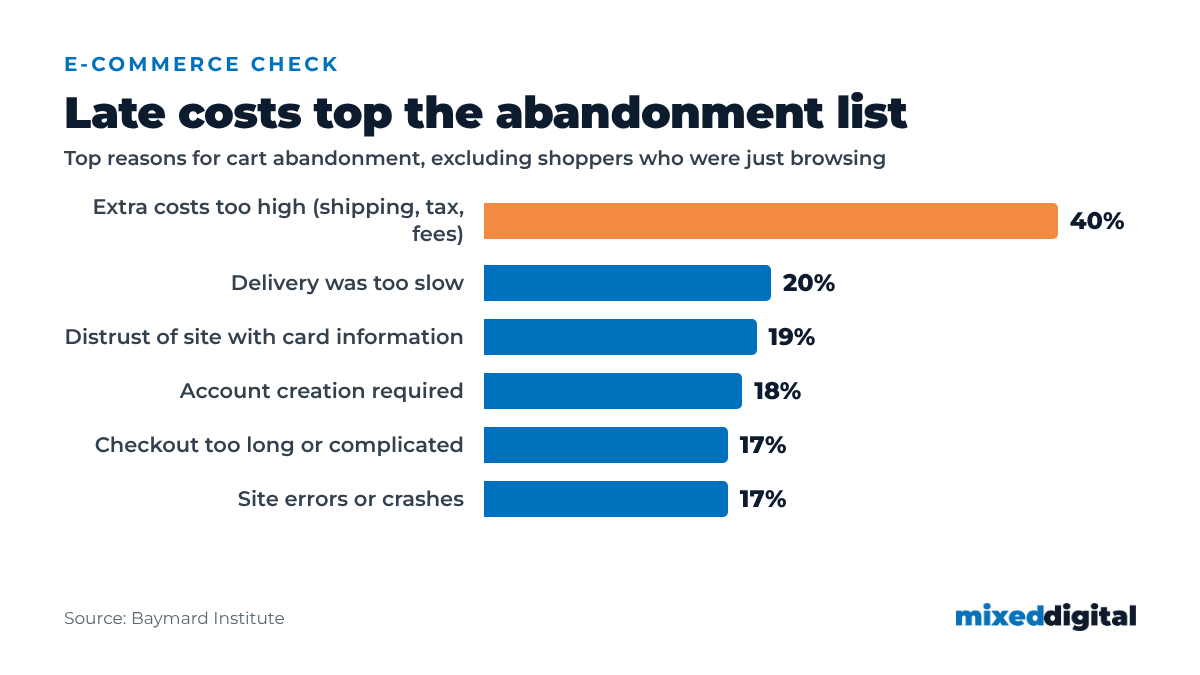
Online shoppers are also leaky. Baymard Institute's review of 50 studies puts the average documented cart abandonment rate at 70.22%. Among shoppers who weren't just browsing, the most common reasons were extra costs that appeared late (40%), slow delivery (20%), distrust of the site with card information (19%), forced account creation (18%), a long or complicated checkout (17%), and site errors (17%).
Service businesses face a different version of the same problem. A February 2026 NP Digital survey of 500 marketers found that only 3% respond to new leads within 5 minutes, and 28% have no defined response process.
The demand is there. The question is who is watching the doors.
Why does marketing break down when several people share it?
Most small and mid-sized businesses don't have a marketing problem. They have an ownership problem.
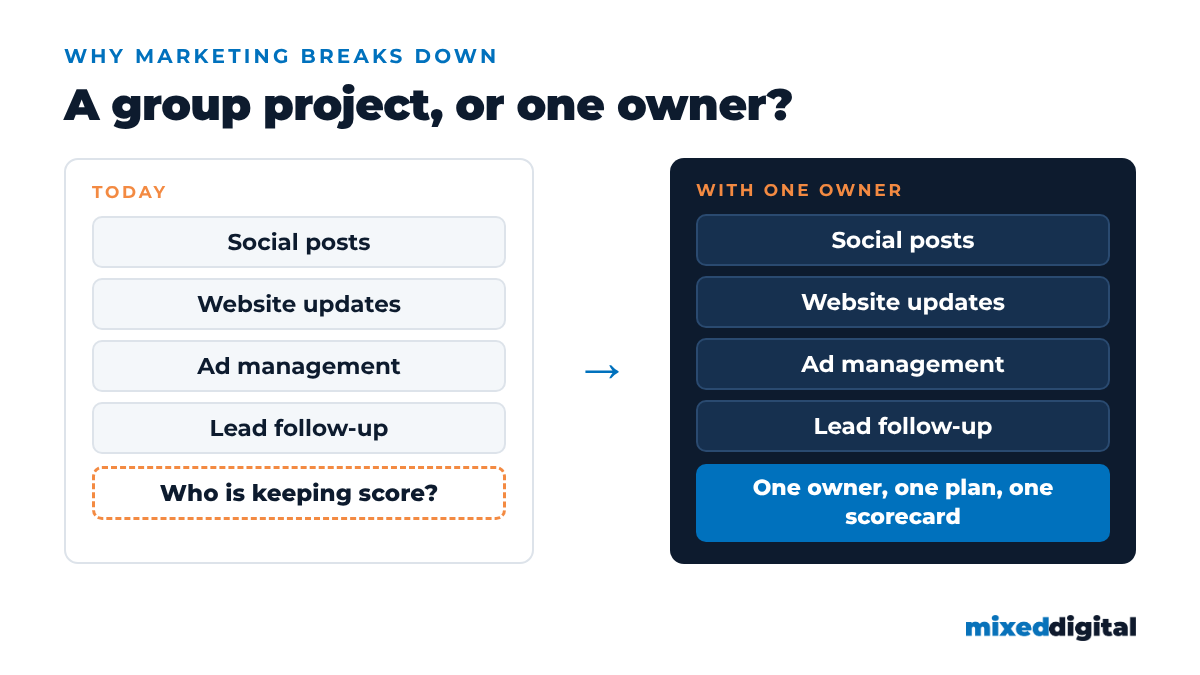
One employee posts to social media when there's time. Another updates the website when something changes. Someone else manages the ads on the side. A fourth answers leads between other jobs. Everyone is working hard, and the work is fine in pieces.
But nobody owns the whole picture. So nobody can answer the questions that matter: Which channel is producing real customers? What does a lead actually cost? What should we do next quarter? When no one owns the scorecard, decisions default to gut feel and the loudest opinion in the room.
The fix isn't more marketing. It's a single strategic owner who connects the pieces, plus a scorekeeper who reports on them honestly.
What is a marketing scorecard, and what belongs on it?
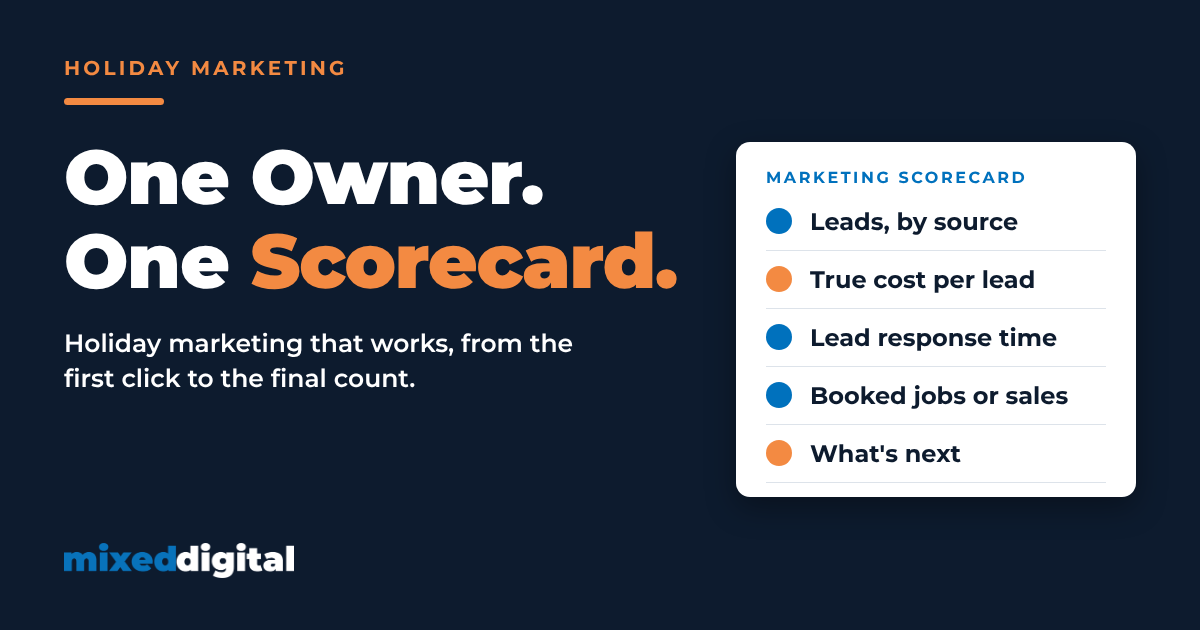
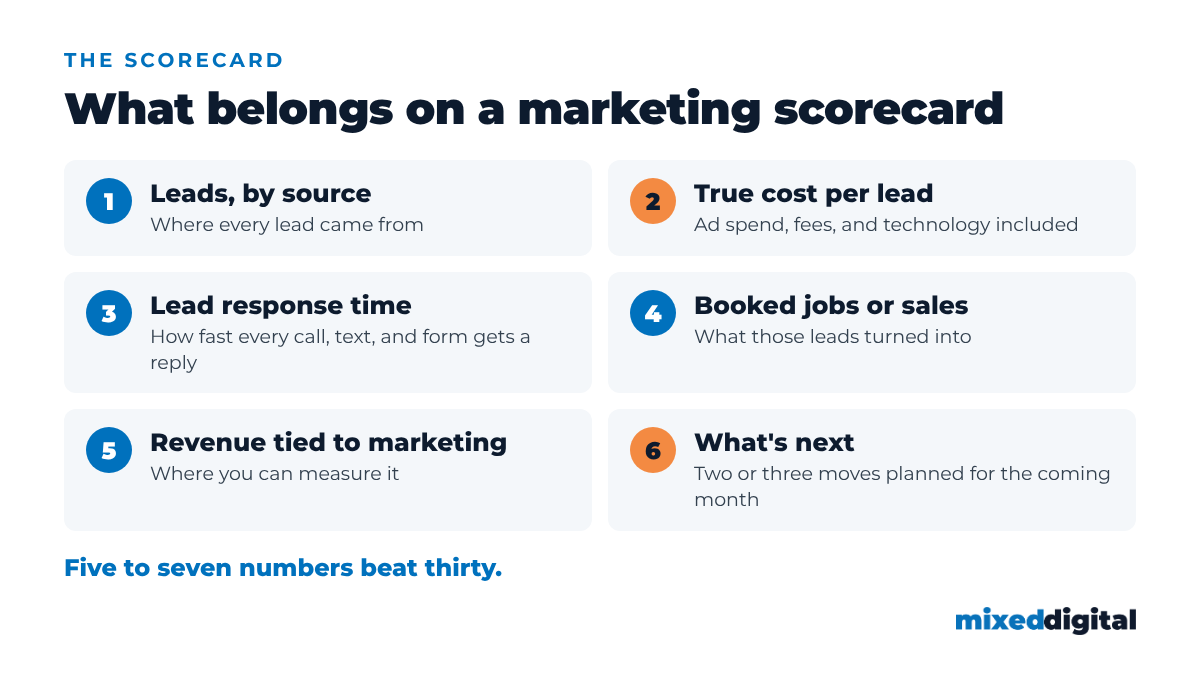
A marketing scorecard is a single report that shows what your marketing costs, what it produces, and what happens next. Keep it short. Five to seven numbers beat thirty.
A strong scorecard includes:
Leads generated, by source
True cost per lead
Lead response time
Booked jobs, appointments, or sales that came from those leads
Revenue connected to marketing, where you can measure it
What's next: the two or three moves planned for the coming month
What is true cost per lead?
True cost per lead is your total marketing cost divided by the leads generated:
(Ad spend + management fees + technology costs) ÷ leads = true cost per lead
Ad spend alone makes marketing look cheaper than it is. Including fees and the technology tied directly to the work gives you a number you can actually plan around, and a number you can improve.
What should e-commerce businesses check before Black Friday?
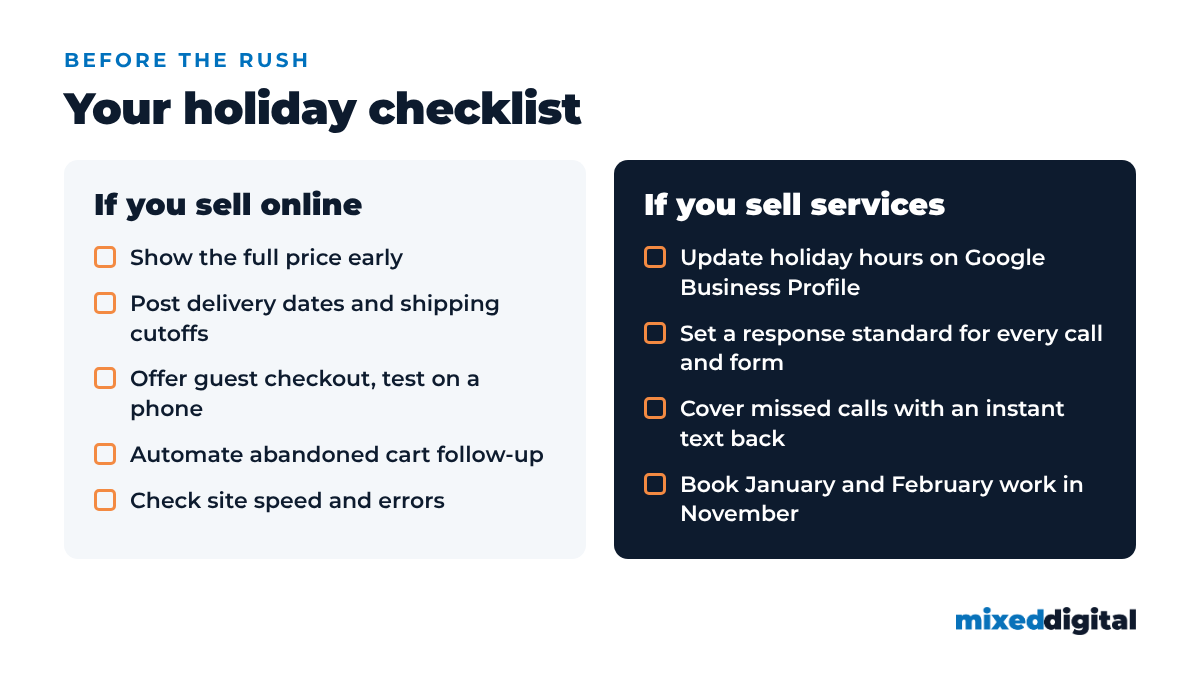
Show the full price early. Late-appearing shipping and fees are the biggest documented reason shoppers abandon carts.
Post delivery dates and holiday shipping cutoffs where shoppers can see them before the final step.
Offer guest checkout and test the full flow on a phone.
Automate abandoned cart follow-up. A customized CRM platform can send the reminder for you, so recovery doesn't depend on someone remembering.
Check your site speed and errors. Crashes and glitches are a documented reason for abandonment, and they are expensive during peak traffic.
What should service businesses check before the holidays?
Update holiday hours on your Google Business Profile and website.
Set a response standard. Decide how fast every call, text, and form gets a reply, and who is accountable. With Miranda, our customized CRM platform, new leads hear back in under 30 seconds.
Cover missed calls. A missed call that gets an instant text back is a lead you kept.
Book the next season early. January and February work gets scheduled in November, while people are planning.
How should consulting and B2B firms use the holiday window?
For firms that sell expertise, the holidays are a decision window, not a selling window. Year-end budgets get spent or lost, Q1 pipelines get built in November and December, and the 2027 plan gets written now or not at all.
Use the quieter weeks to answer three questions before December 31:
Who owns marketing results today, by name?
What does a lead really cost, all in?
What are the two or three moves for Q1, and how will we know they worked?
Start January with a plan and a scorecard, not a blank page.
How do you start with one owner and one scorecard?
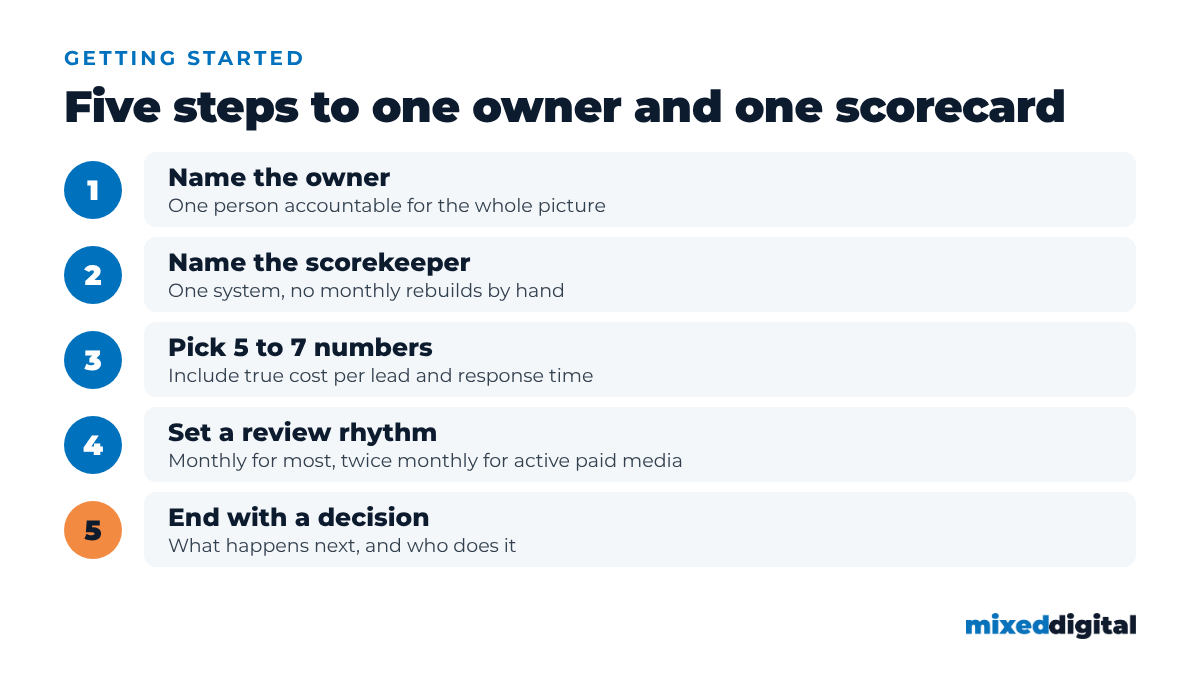
Name the owner. One person is accountable for the whole marketing picture. That can be an internal leader, a fractional CMO, or an outside partner, as long as it is one name.
Name the scorekeeper. Someone builds and maintains the scorecard, ideally from one system so the numbers aren't rebuilt by hand every month.
Pick five to seven numbers. Include true cost per lead and response time.
Set a review rhythm. Monthly works for most businesses. Active paid media campaigns may need a check-in twice a month.
End every review with a decision. Each meeting should finish with what you're doing next and who is doing it.
Here's what that looks like in practice. One business we work with had marketing tasks spread across several employees, with no single owner and no scorekeeper. Once we put one strategic owner over the effort and gave them one scorecard, the day-to-day work didn't change much. What changed was how connected the owner felt to their own marketing: what was happening, why, and what was coming next.
Frequently Asked Questions
What is a marketing scorecard?
A marketing scorecard is a single report that shows what your marketing costs, what it produces, and what happens next. It tracks a small set of numbers tied to revenue, such as leads, true cost per lead, response time, and booked jobs or sales, and it has one named person responsible for keeping it accurate.
What is true cost per lead?
True cost per lead is your total marketing cost divided by the leads generated. Total cost includes ad spend, agency or management fees, and any technology costs tied directly to the work. Ad spend alone understates what a lead really costs.
When should I start planning holiday marketing?
Start before the season begins. For e-commerce, that means checkout, shipping messaging, and abandoned cart follow-up should be ready before Black Friday. For service businesses, it means updated holiday hours, a fast lead response process, and January bookings started in November.
Do I need an agency, or can my team handle marketing?
Your team can absolutely handle the daily work. What most businesses are missing is a single strategic owner and a scorekeeper who connects the pieces. That role can be filled internally or by an outside partner, such as a fractional CMO, as long as one person is accountable for the whole picture.
Ready to put one owner and one scorecard in place?
If you're heading into the holidays, or into 2027, with marketing spread across too many hands, let's take a look together. We'll walk through who owns what, what a lead really costs, and what to do next.
Book a Call or Request a free marketing audit
Sources
