Retainer or One-Off Project? What 2026's Cash-Flow-Anxious Small Businesses Are Actually Choosing
Talk to almost any small business owner right now, whether they run a leadership coaching practice, a cutting-edge robotics firm, or an essential home services business, and the conversation tends to circle back to the same handful of worries. Not inflation. Not tariffs. Money in, money out, and whether this year's growth plans will strain the business more than they help it.
That shift matters for how small businesses buy marketing, too. A one-time website redesign or a single ad campaign can feel like the safer, cheaper choice when cash is tight. But the data tells a more interesting story about which approach is actually winning right now, and why.
What Small Business Owners Are Actually Worried About in 2026
Three themes keep showing up in small business surveys and owner conversations this year.
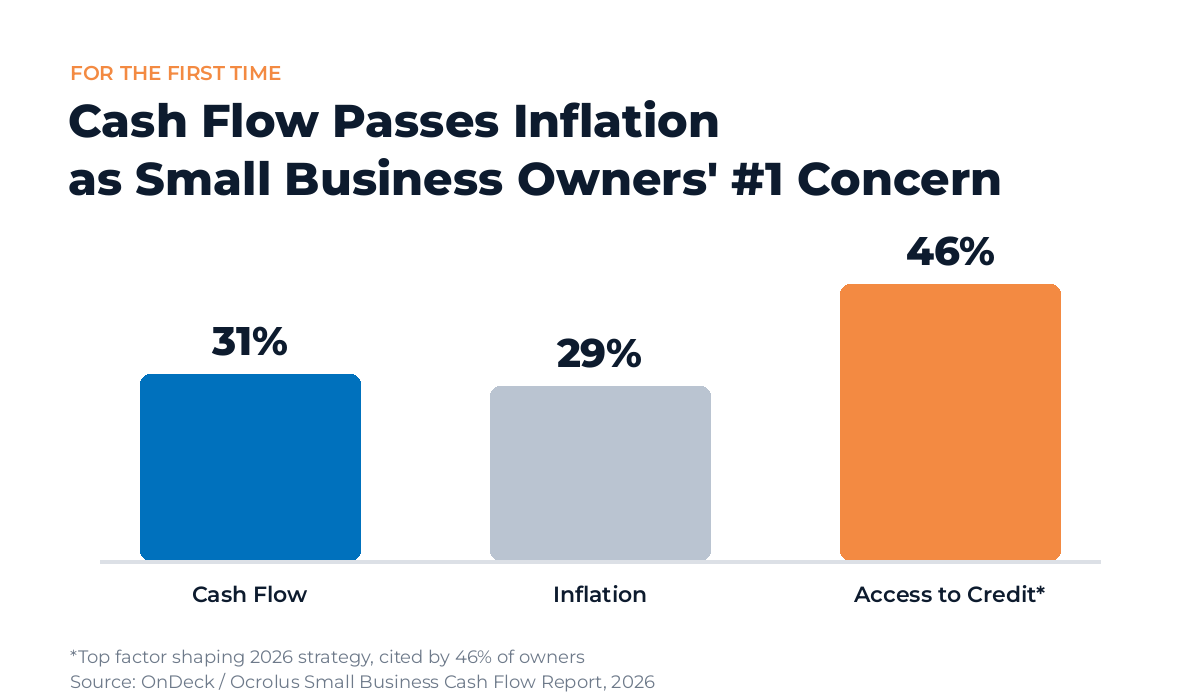
Cash flow has overtaken inflation as the top concern. For the first time on record, small business owners rank cash flow above inflation as their single biggest worry, according to the 2026 OnDeck and Ocrolus Small Business Cash Flow Report. Growth expectations are still strong (93% of owners expect growth this year), but the daily reality of making payroll is where the pressure actually lives.
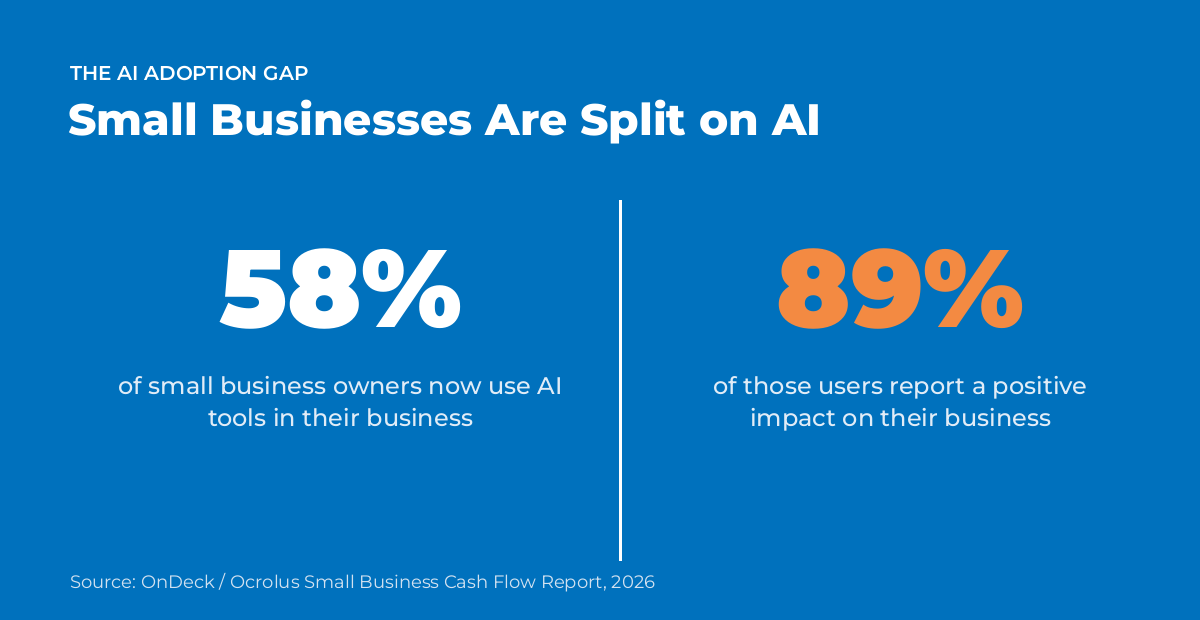
AI adoption is real, but trust is split. More than half of small business owners (58%) now use AI tools, and 89% of those users report a positive impact. At the same time, a meaningful share of owners still believe AI won't affect their business this year. That gap between early adopters and skeptics is playing out in real time inside small consultancies and service firms trying to decide how much to invest.
Growth without added risk. Close to half of small business owners cite their ability to grow as a top 2026 concern, and rising employment costs are close behind. Owners want revenue growth that doesn't require betting the business on new hires or a big one-time spend.
Why a One-Off Project Feels Safer (Even When It Isn't)
A single project has an appealing simplicity. It has a fixed scope, a fixed price, and a finish line. For a business watching every dollar, that predictability feels like the responsible choice.
The catch is what happens after delivery. A new website, a one-time ad push, or a rebrand gives you a snapshot: a strong starting point, but no mechanism to keep improving once the invoice is paid. Rankings drift, ad performance decays without ongoing management, and the next time something needs attention, the business is back to square one, sourcing a new vendor, re-explaining the business, and paying for onboarding all over again.
For a business already worried about cash flow, that stop-and-start pattern is often more expensive over a year than it looks in the moment.
The Retainer Advantage
A monthly retainer flips the risk profile. Instead of one large, front-loaded expense, the cost is spread into a predictable number that's easier to plan around, which is exactly what a cash-flow-anxious owner needs. More importantly, the work doesn't stop at delivery. SEO rankings keep building. Ad performance keeps getting refined against real data. Lead follow-up keeps improving instead of quietly decaying.
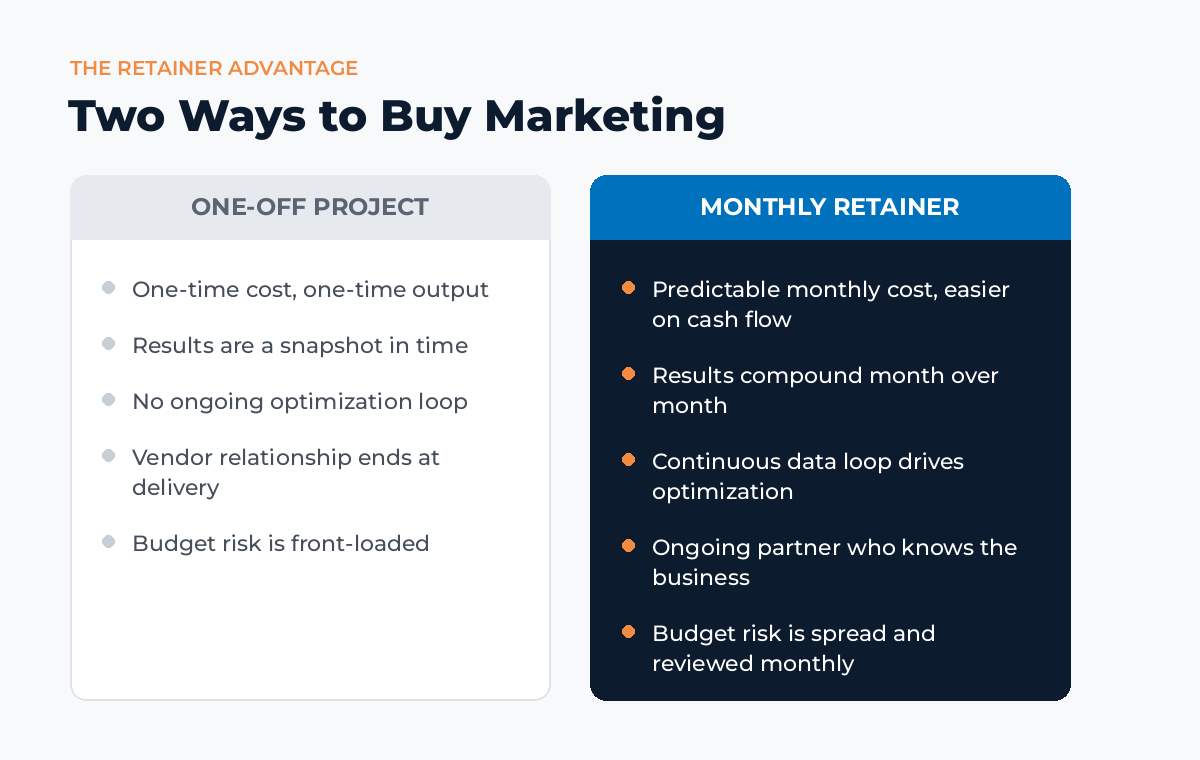
That compounding effect is the whole argument for a data-driven approach to marketing. A one-off project gets you a single data point. A retainer gets you a feedback loop, month one versus month six versus month twelve, so decisions get sharper over time instead of starting from zero every time.
How to Decide Which One Fits Right Now
Not every business needs a retainer today, and a one-off project is still the right call in a few situations: a business that needs a single, well-defined deliverable (a new website, a rebrand) with no ongoing management need, or a business testing the waters with a new marketing partner before committing further.
A retainer tends to be the better fit when growth is the goal, not just a one-time fix. If the business needs its marketing to keep adjusting to new data, competitors, or seasonality, a retainer is built for that in a way a single project structurally can't be. And if cash flow predictability matters more than a lower sticker price, a flat monthly number is easier to plan around than an unpredictable project quote followed by a gap in coverage.
The businesses making the most of 2026's growth expectations tend to be the ones treating marketing as an ongoing system, not a one-time expense.
Ready to Talk Through What Fits Your Business?
Every business's situation is different, and the right structure depends on where the business actually is right now, not a one-size-fits-all recommendation. If you want a straight, data-driven read on whether a retainer or a project makes more sense for where your business is headed, let's talk it through.

Sources: OnDeck / Ocrolus 2026 Small Business Cash Flow Trend Report; U.S. Chamber of Commerce Small Business Index, Q1 2026; SBE Council Small Business Check Up Survey, 2026; Thryv 2026 SMB Outlook Survey.
